Top Kashmiri Products Every Home Should Have: Saffron, Pashmina, Crewel & More
Bringing the Timeless Beauty of Kashmir into Your Home
By: Kashmir Store | October 2026
From the fragrance of Kashmir saffron and Kahwa to the intricate beauty of walnut wood, Papier-Mâché, carpets and crewel curtains, these traditional products bring the Valley’s craftsmanship, flavour and character into modern homes.
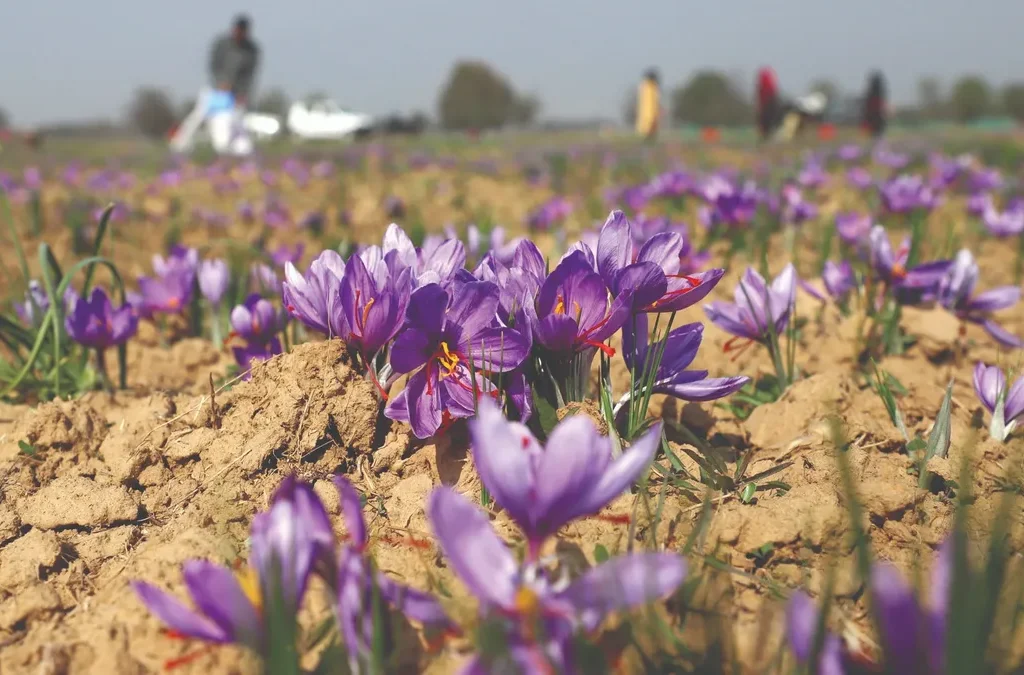
Kashmir is often introduced through its landscapes: Dal Lake at sunrise, snow-covered mountains, apple orchards, saffron fields and the changing colours of the Chinar.
But there is another way to experience the Valley.
Open a box of Kashmiri saffron. Hang a piece of embroidered crewel fabric by a window. Place a walnut-carved box on a coffee table. Brew Kahwa in the evening. Wrap yourself in a finely made Pashmina when winter arrives.
Suddenly, Kashmir is no longer just a destination.
It is part of the home.
For generations, Kashmiri artisans, growers, weavers and craftsmen have transformed local materials and inherited techniques into products that are both useful and beautiful. Several of these traditions have also received formal Geographical Indication recognition. The official GI records include Kashmir Pashmina, Kashmir Sozani Craft, Kani Shawl, Kashmir Paper Machie, Kashmir Walnut Wood Carving, Khatamband and Kashmiri Hand Knotted Carpet. Kashmir Saffron is separately registered as a GI agricultural product.
That makes the modern search for authentic Kashmiri products more interesting than simply buying souvenirs.
The real question is: which pieces are worth bringing into an everyday home?
Here is a carefully curated list.
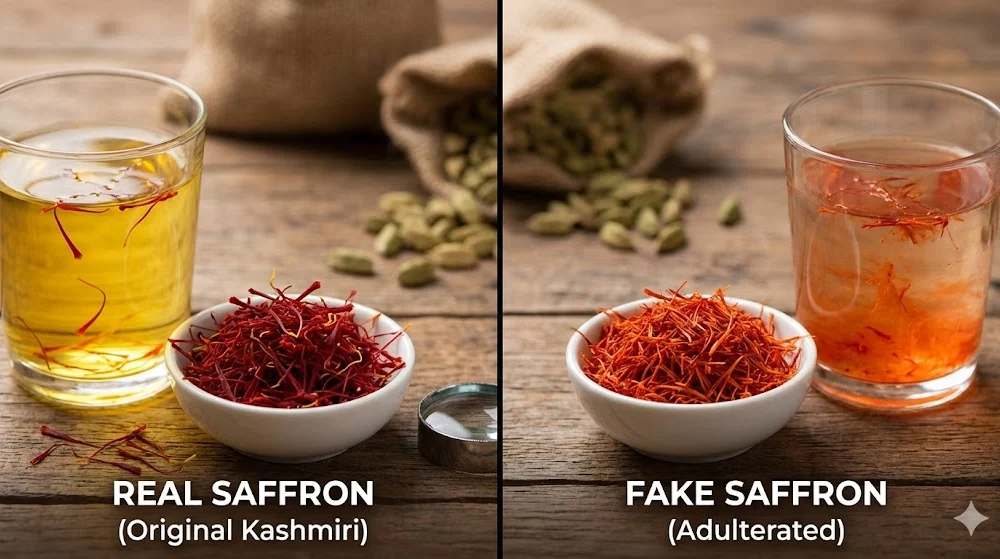
01. Kashmiri Saffron: The Smallest Luxury in the Kitchen
Few Kashmiri products carry as much recognition as saffron.
Known locally as kesar, the spice is associated particularly with the saffron-growing belt around Pampore in Pulwama district. Spices Board market information also identifies Pampore among India’s saffron market centres.
More importantly for shoppers, Kashmir Saffron has a registered Geographical Indication. India’s GI Registry records it under Application No. 635, with registration dated May 1, 2020.
That distinction matters because “Kashmiri saffron” should not simply be treated as a generic marketing description.
Why every kitchen can use it
You do not need much saffron to make an impact.
A few strands can add colour, aroma and a distinctive flavour to:
- Kahwa
- Kheer
- Phirni
- Rice dishes
- Milk-based desserts
- Festive sweets
- Special-occasion beverages
It is particularly suited to festive gifting because even a small package feels premium.
What should buyers look for?
When shopping for saffron, buyers should pay attention to the stated origin, packaging, traceability and any applicable certification rather than relying only on colour or marketing language.
The GI status of Kashmir Saffron provides geographical protection; it does not mean that every product carrying a casual “Kashmiri” description online is automatically GI-certified.
Indicative Kashmir Store price: its current online listing shows 1 gram of saffron at around ₹349, although prices can change with grade, harvest, packaging and market conditions.
Best for: kitchens, festive cooking, premium gifting and small luxury purchases.
02. Kashmiri Kahwa: A Cup That Feels Like Hospitality
If saffron is one of Kashmir’s signature flavours, Kahwa is perhaps its most comforting ritual.
Traditionally made with green tea and aromatic ingredients such as cardamom, cinnamon, saffron and nuts, Kashmiri Kahwa is closely associated with hospitality and cold-weather gatherings.
A traditional samovar adds another layer to the experience, although modern households can prepare Kahwa using an ordinary saucepan or kettle.
Why keep Kahwa at home?
Because it is easy to turn into a small ritual.
Instead of another ordinary cup of tea, bring out a Kashmiri Kahwa blend when guests arrive. Add almonds or other nuts, use a small decorative cup and let the aroma do the rest.
It works particularly well during:
- Winter evenings
- Family gatherings
- Festive celebrations
- Dinner parties
- Corporate gifting
- Housewarming occasions
Kashmir Store currently lists a 250-gram Saffron Kahwa pack at ₹349, providing a useful reference point for the entry-level cost of a Kashmiri tea gift.
Indicative budget: ₹300–₹800+ depending on blend, packaging and quantity.
Best for: everyday hospitality and gifting.
03. Pashmina: The Kashmiri Classic That Never Really Goes Out of Style
There are few textile names more closely associated with Kashmir than Pashmina.
But this is also one category where consumers need to shop carefully.
Kashmir Pashmina is officially registered as a GI handicraft, and the GI system recognises the geographical and craft identity attached to the product.
Authenticity matters because the word “Pashmina” is widely used in commercial descriptions for products of very different compositions and manufacturing methods.
Why Pashmina belongs in a heritage home
A good shawl is not simply a winter accessory.
It can become:
- A family heirloom
- A wedding gift
- A statement piece for special occasions
- A luxury travel accessory
- A collectible example of textile craftsmanship
Intricate Kani weaving and traditional embroidery can significantly increase both the craftsmanship and the price.
How much should you budget?
There is no single “Pashmina price.”
A simple piece and an extensively worked traditional shawl can occupy completely different price brackets.
For perspective, Kashmir Store currently lists a semi-Pashmina Kani shawl at ₹10,000, while the wider market for highly handcrafted Pashmina products can extend substantially higher.
Indicative budget: ₹5,000–₹25,000+, with premium hand-crafted pieces potentially costing considerably more.
Shopping tip: Ask what the textile is made from, what craftsmanship has gone into it, and whether the item is represented as GI-certified or otherwise authenticated.
Best for: wardrobes, wedding gifts, heirlooms and premium gifting.
04. Kashmiri Crewel Curtains: Turn a Window Into a Piece of Kashmir
This is the category that deserves far more attention in discussions about Kashmiri home décor.
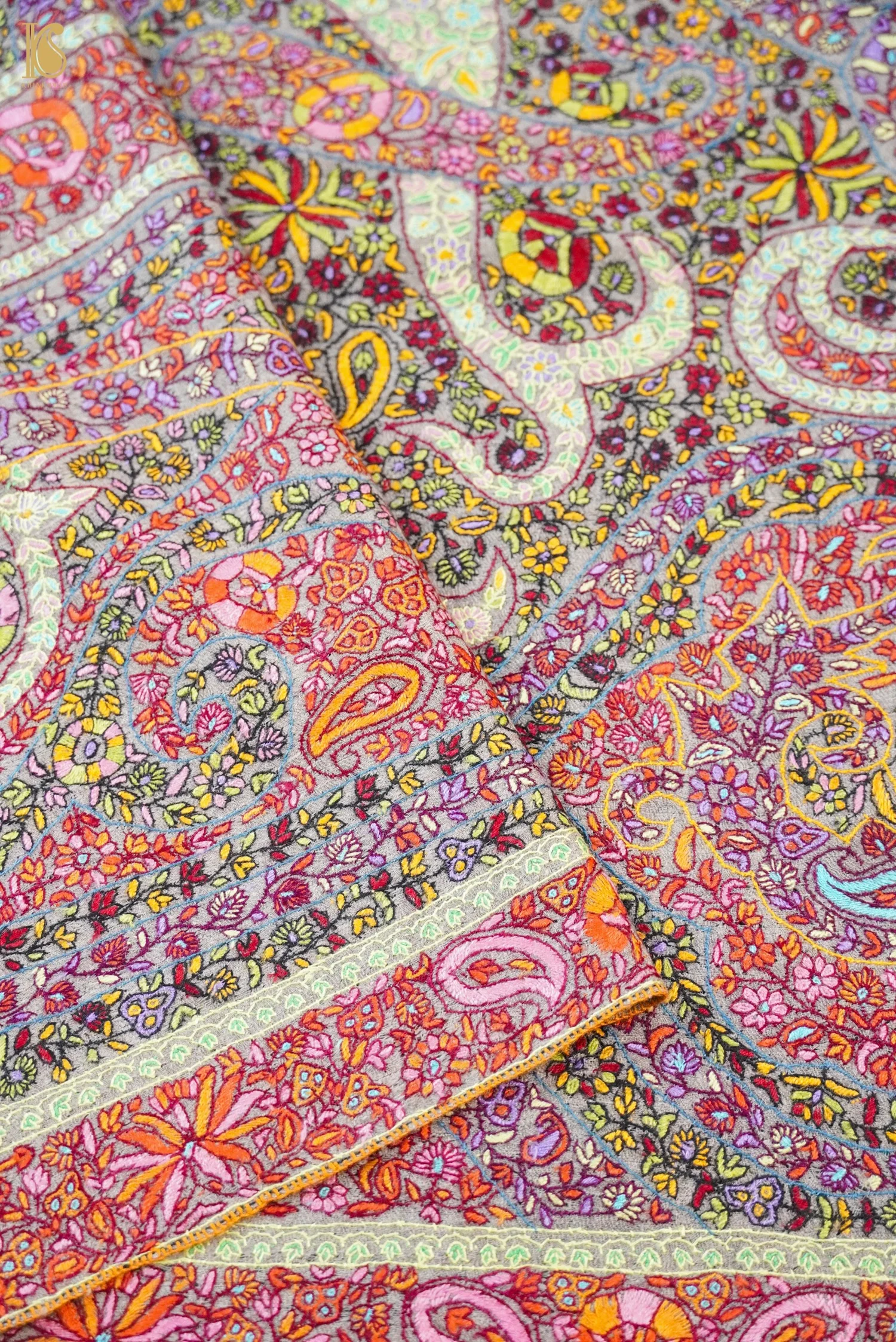
Crewel embroidery has traditionally been used for furnishing textiles, with floral and creeper motifs worked into heavier fabrics. The craft is particularly suited to interiors because it can be adapted for drapery, upholstery, cushion covers and bedspreads.
Kashmir Store’s current catalogue specifically identifies crewel for curtains, bedspreads, cushion covers and shopping bags, while its crewel material is listed by running metre. The current displayed price is approximately ₹1,800 per metre, with the final cost depending on embroidery and customisation.
Why crewel curtains can transform a room
Modern interiors often rely on plain curtains.
Crewel gives the opposite effect.
A well-designed Kashmiri curtain can introduce:
- Floral detailing
- Traditional Kashmiri motifs
- Texture
- Colour
- Handmade character
- A stronger sense of place
It can work particularly well in living rooms, reading corners, bedrooms, boutique hotels and heritage-style interiors.
Tentative costing
Because curtain prices depend heavily on width, fabric, embroidery density, lining, stitching and finished dimensions, it is better to think in ranges.
Indicative budget:
- Crewel fabric: around ₹1,500–₹2,500+ per metre
- Simple finished curtains: approximately ₹4,000–₹8,000+ per pair
- Heavily embroidered/custom curtains: ₹10,000–₹25,000+ per pair
These are planning estimates, not fixed market quotations. Custom orders can move substantially higher.
Best for: living rooms, bedrooms, boutique interiors and statement windows.
05. Crewel Cushion Covers and Bedspreads: Small Changes, Big Difference
If full curtains feel like too much commitment, start smaller.
A pair of embroidered cushion covers can introduce Kashmiri character without requiring an entire interior makeover.
Crewel can also be used for:
- Bedspreads
- Table runners
- Upholstery
- Decorative panels
- Shopping bags
- Accent textiles
The appeal is its ability to bridge traditional craft and contemporary décor.
A neutral sofa, a wooden centre table and a handful of richly embroidered cushions can create a distinctly Kashmiri visual language without making the room feel like a museum.
Indicative budget: ₹800–₹3,000+ for smaller embroidered décor pieces; larger or heavily worked products may cost considerably more.
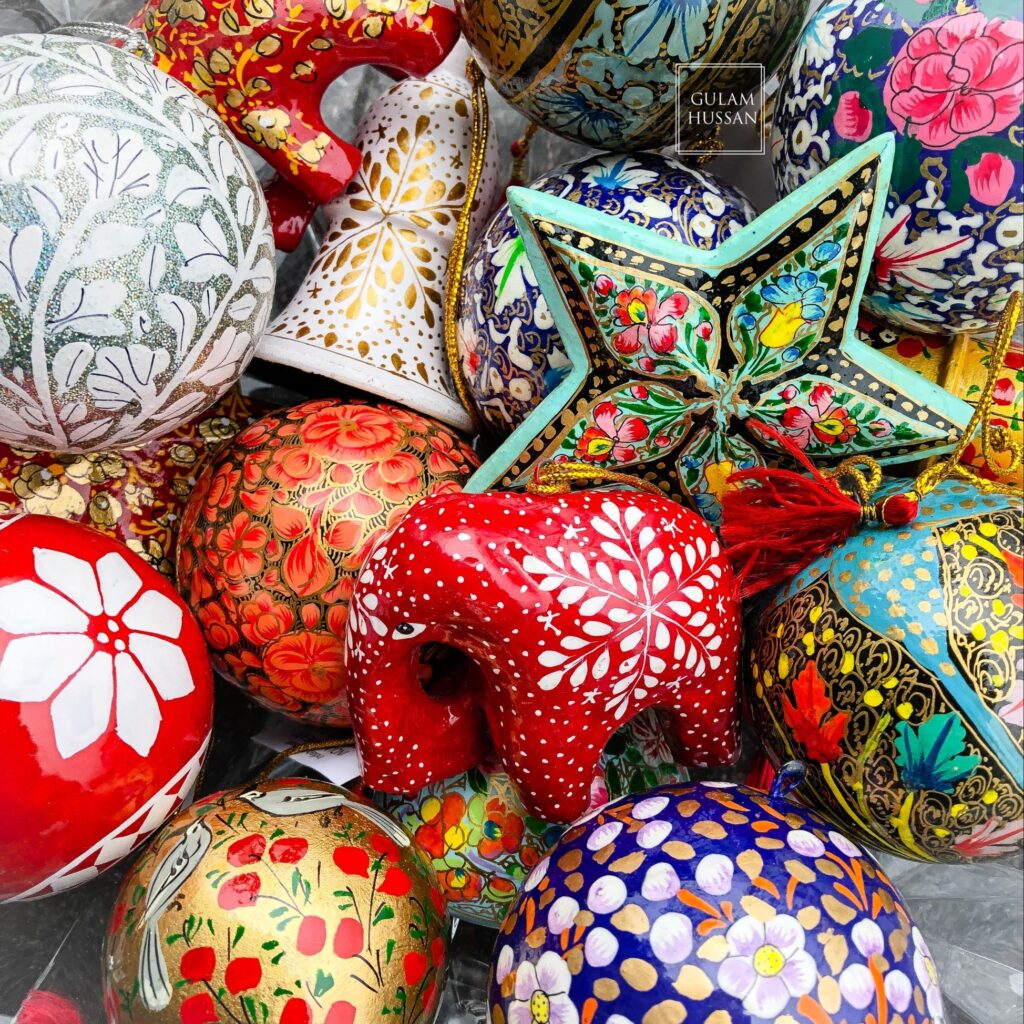
06. Papier-Mâché: Kashmir’s Colourful Art for Modern Interiors
Few Kashmiri crafts are as immediately recognisable as Papier-Mâché.
The technique transforms a lightweight base into a surface for intricate painting and decorative work. Floral designs, traditional motifs and vivid colours are among the characteristics that have helped Kashmiri Papier-Mâché develop an international identity.
The craft has formal GI recognition as Kashmir Paper Machie.
What can you actually use at home?
Forget the idea that handicrafts have to sit untouched on a shelf.
Papier-Mâché can become part of everyday décor through:
- Jewellery boxes
- Tissue boxes
- Decorative trays
- Coasters
- Flower vases
- Hanging ornaments
- Small storage boxes
- Festive décor
Kashmir Store’s current catalogue, for example, includes Papier-Mâché holders, hanging pieces, tissue boxes and coaster sets, with listed prices ranging from a few hundred rupees for smaller pieces.
Indicative budget: ₹200–₹1,500 for smaller décor; ₹2,000–₹10,000+ for larger or more elaborate pieces.
The appeal
The best pieces do something simple: they make an ordinary corner look considered.
A plain table becomes more interesting with a hand-painted box. A bookshelf gains colour from a decorative vase. A festive display can be built around a handful of small handcrafted ornaments.
07. Kashmiri Walnut Wood Carving: Furniture With a Story
Kashmiri walnut wood carving occupies a special place in the Valley’s craft tradition.
The craft is officially registered as Kashmir Walnut Wood Carving under India’s GI framework.
The attraction is obvious once you see the detailing.
Rather than mass-produced uniform surfaces, traditional carved walnut pieces can carry elaborate floral and ornamental patterns.
What should you bring home?
For most households, smaller products are easier to integrate than large furniture.
Consider:
- Jewellery boxes
- Serving trays
- Photo frames
- Pen stands
- Decorative panels
- Small tables
- Storage boxes
A walnut-carved box on a console table can be both functional and decorative.
Tentative price range
₹1,000–₹5,000: smaller boxes, frames and accessories
₹5,000–₹20,000+: larger carved décor and furniture
₹20,000+: substantial, heavily carved or customised furniture pieces
The actual price depends on the quality of walnut, dimensions, carving complexity and amount of handwork.
Best for: living rooms, study spaces, offices and heirloom gifting.
08. Kashmiri Hand-Knotted Carpets: When the Floor Becomes the Artwork
A Kashmiri carpet is not an impulse décor purchase.
It is a commitment to craftsmanship.
Kashmiri Hand Knotted Carpet is officially GI registered, alongside several other recognised Kashmiri crafts.
Hand-knotting is labour intensive, and the value of a carpet can depend on factors including fibre, knot density, design complexity, dimensions, workmanship, age and provenance.
Why invest in one?
A good carpet can define an entire room.
It adds:
- Warmth
- Texture
- Pattern
- Colour
- Acoustic softness
- Heritage character
And unlike mass-produced rugs, a traditionally crafted carpet can have a visual identity of its own.
Tentative budgeting
Because handmade carpets vary enormously, a broad consumer planning range is more useful than pretending there is one standard price.
Small decorative pieces: ₹5,000–₹20,000+
Medium hand-knotted carpets: ₹20,000–₹75,000+
Large, intricate or premium pieces: ₹75,000 to several lakhs and beyond
Buyers considering a major purchase should ask about material, knotting technique, dimensions, origin, workmanship and documentation.
09. Kashmiri Dry Fruits: The Everyday Luxury
Not everything Kashmir sends to the world belongs on a display shelf.
Walnuts, almonds, dried apricots and other dry fruits can become part of everyday life.
Kashmir Store’s current catalogue, for example, lists walnuts, walnut kernels, Kagzi almonds, almond kernels, dried apricots and dried figs. Current displayed prices include around ₹450 for 750g of large walnuts, ₹1,200 for 750g walnut kernels, ₹450 for 500g Kagzi almonds and ₹450 for 450g dried apricots.
Prices naturally fluctuate according to season, grade, quantity and packaging.
Why keep them at home?
They are versatile.
Add walnuts to breakfast. Keep almonds for snacking. Use dried fruit in desserts. Or build a small dry-fruit basket for guests.
They also make practical gifts because they combine regional identity with everyday usefulness.
Indicative budget: ₹400–₹1,500 per pack depending on product and quantity.
Best for: everyday consumption, festive hampers and corporate gifts.
10. Kashmiri Spices: Bring the Valley Into Everyday Cooking
A Kashmiri kitchen is built around aroma as much as flavour.
Spices such as Kashmiri red chilli, fennel, dry ginger and black cumin can add a distinctive regional character to home cooking.
A carefully assembled spice collection is also one of the most affordable ways to begin exploring Kashmiri food traditions.
Kashmir Store’s current catalogue includes Kashmiri red chilli, black cumin and other herbs and spice products, with listed prices varying by product and quantity.
Try building a Kashmiri spice shelf
Start with:
- Kashmiri red chilli
- Fennel
- Dry ginger
- Black cumin
- Saffron
- Kahwa spices
- Regional spice blends
You do not need a professional kitchen.
Even simple dishes can take on a different personality when quality regional ingredients are used thoughtfully.
Indicative budget: ₹300–₹1,500 for a starter collection.
11. Kashmiri Copperware: Functional Craft With a Traditional Soul
Copperware has long been part of Kashmiri household culture.
The samovar is perhaps the best-known example: a traditional vessel associated with the preparation and serving of tea, particularly Kahwa.
Today, copper products can work as both functional tableware and decorative objects.
Popular choices
- Samovars
- Tea kettles
- Serving dishes
- Bowls
- Decorative vessels
- Small kitchen accessories
Kashmir Store currently lists a Kashmiri copper samovar at approximately ₹9,500, giving shoppers a real-world reference point for a traditional statement piece.
Indicative budget: ₹2,000–₹15,000+, depending on size, weight, workmanship and design.
A copper samovar can become the centrepiece of a tea corner, dining room or traditional living space.
12. Kashmiri Gift Hampers: Put Several Traditions Into One Box
Sometimes choosing one product is the hardest part.
That is where a curated Kashmiri gift hamper makes sense.
Instead of sending one object, combine different aspects of the Valley:
Classic Kashmir hamper
- Saffron
- Kahwa
- Almonds
- Walnuts
- Papier-Mâché décor
Premium Kashmir hamper
- Saffron
- Premium dry fruits
- Handcrafted Papier-Mâché
- Kashmiri textile
- Decorative walnut box
Corporate Kashmir hamper
- Kahwa
- Saffron
- Dry fruits
- Small handcrafted décor
- Custom packaging
Tentative budget
₹1,000–₹2,500: compact festive hampers
₹2,500–₹5,000: premium food-and-craft combinations
₹5,000–₹15,000+: luxury hampers with textiles or major handcrafted pieces
For bulk corporate orders, pricing can change significantly according to quantity, packaging and customisation.
Why Kashmiri Products Are Becoming More Than Souvenirs
There is an important shift happening in the way regional handicrafts are consumed.
The old model was straightforward: visit Kashmir, buy a souvenir and take it home.
The newer model is more integrated.
People are buying Kashmiri products for their homes, wardrobes, kitchens, offices and gifting programmes.
That change is particularly visible in categories such as furnishing textiles.
A crewel curtain is not necessarily a souvenir. It is an interior product.
A walnut box is not merely a keepsake. It can be useful storage.
A carpet is not simply an expression of Kashmiri heritage. It can anchor an entire living room.
And saffron is not just a premium gift. It is an ingredient that can become part of a family’s kitchen.
This is where heritage craftsmanship meets modern consumption.
What Makes a Kashmiri Product Worth Buying?
Authenticity should be the first question—not simply the cheapest price.
Buyers should consider:
1. Origin
Where was the product made or grown?
2. Material
Is the stated fibre, wood, textile or food ingredient clearly identified?
3. Craftsmanship
Is the product handmade, hand-knotted, hand-carved or machine-produced?
4. Certification
For GI-recognised categories, understand what the GI actually covers and look for appropriate documentation or authorised certification where applicable.
5. Seller transparency
A credible seller should be able to explain the product rather than simply attaching the word “authentic” to it.
This is especially important for expensive categories such as Pashmina and carpets.
India’s official handicrafts system recognises a substantial body of GI crafts from Jammu & Kashmir, including Pashmina, Sozani, Kani Shawl, Papier-Mâché, walnut carving, Khatamband and hand-knotted carpet.
A Practical Kashmir Shopping Budget for Your Home
You do not need to spend a fortune to bring Kashmir into your interiors.
| Product | Indicative Budget |
|---|---|
| Kashmiri saffron | ₹300–₹1,500+ |
| Kahwa | ₹300–₹800+ |
| Dry fruits | ₹400–₹1,500+ |
| Papier-Mâché décor | ₹200–₹10,000+ |
| Crewel fabric | ₹1,500–₹2,500+ per metre |
| Crewel curtains | ₹4,000–₹25,000+ per pair |
| Walnut wood décor | ₹1,000–₹20,000+ |
| Semi-Pashmina/Kani products | ₹5,000–₹15,000+ |
| Pashmina | ₹5,000–₹25,000+ |
| Copper samovar | ₹2,000–₹15,000+ |
| Hand-knotted carpet | ₹5,000–₹75,000+ |
| Premium/luxury carpets | ₹75,000–several lakhs |
Important: These are indicative planning figures, not fixed market rates. Handmade products can vary substantially according to material, dimensions, workmanship, embroidery density, knot count, provenance, season and customisation. Current Kashmir Store listings provide some concrete price references, but online prices and availability can change.
Build Your Own Kashmiri Home Collection
The beauty of Kashmiri products is that you do not have to redesign your entire home.
Start with one piece.
Perhaps a small Papier-Mâché box on the coffee table.
Then add crewel cushion covers.
Bring in a walnut tray.
Keep saffron and Kahwa in the kitchen.
Later, if you want something more dramatic, consider embroidered curtains, a hand-knotted carpet or a traditional copper samovar.
Over time, the collection begins to tell a story.
And that may be the greatest appeal of buying authentic Kashmiri products: they are not simply things.
They are reminders of places, people, skills and traditions.
Kashmir Store: Bringing Kashmiri Heritage to Modern Homes
For shoppers looking to explore Kashmiri products online, Kashmir Store currently offers categories spanning herbs and spices, gourmet foods, attire, Papier-Mâché and home décor. Its catalogue includes products such as saffron, Kahwa, dry fruits, crewel work, copper samovars, Papier-Mâché décor and hand-knotted carpets.
The important advantage of an online heritage store is not simply convenience.
It is the ability to compare products, understand materials and craftsmanship, check available sizes and select according to budget rather than making a hurried purchase while travelling.
For larger items—including custom crewel curtains, furnishing textiles, carpets and specialised gift collections—buyers should confirm dimensions, material, embroidery or knotting details, final price and delivery arrangements before placing an order.
From Kashmir to Your Living Room
A Kashmiri home collection does not have to look old-fashioned.
In fact, some of the most beautiful combinations are surprisingly contemporary.
Pair a minimalist sofa with crewel cushions.
Place a carved walnut box against a modern bookshelf.
Use a Papier-Mâché vase in an otherwise neutral room.
Serve Kahwa after dinner.
Keep saffron for special recipes.
Lay a traditional carpet beneath modern furniture.
Hang embroidered curtains against a simple wall.
The result is not a replica of a Kashmiri house.
It is something more personal: a modern home carrying small, carefully chosen pieces of Kashmir.
And that is perhaps the best reason to buy Kashmiri products today.
Not merely because they are beautiful.
Not merely because they make memorable gifts.
But because behind many of them are living craft traditions—and every thoughtful purchase has the potential to keep those traditions visible, valued and relevant for the next generation.
Kashmir Store — authentic heritage, timeless craftsmanship and the character of Kashmir, delivered to your doorstep.
Explore Kashmiri products at Kashmir Store
Prices mentioned in this feature are indicative and may change. Buyers should verify current product specifications, certification, availability, shipping and final pricing before purchase. GI registration protects recognised geographical products and should not be interpreted as a blanket certification of every product marketed using a regional name.